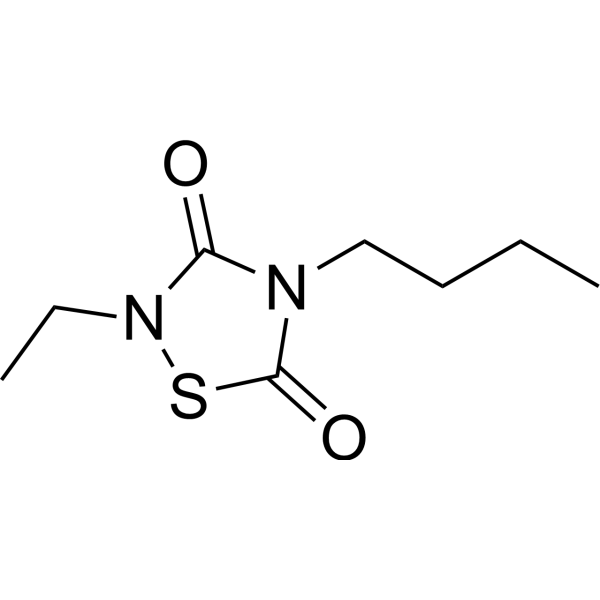
RGS8
RGS8 (Regulator of G-protein Signaling 8) is a member of the R4 subfamily of regulator of G-protein signaling proteins and functions as a GTPase-activating protein that accelerates GTP hydrolysis on activated Gα subunits, thereby terminating G protein-coupled receptor (GPCR) signaling cascades[1][2]. RGS8 contains a conserved RGS domain and regulates signaling downstream of multiple GPCR pathways, including muscarinic acetylcholine receptor and dopamine receptor signaling, highlighting its role in neuronal signal transduction and cellular responsiveness[2][3]. Mechanistically, RGS8 modulates GPCR-dependent signaling kinetics and can regulate downstream effectors such as G-protein-coupled inwardly rectifying potassium channels, calcium signaling pathways, and ERK-associated signaling networks[3][4]. Structural studies demonstrated that RGS8 interacts with both Gαi/o and Gαq family proteins and adopts a conserved binding mode with Gαq, providing an important framework for understanding G-protein selectivity among RGS family members[5]. In disease-relevant and experimental systems, RGS8 is highly expressed in the central nervous system, particularly in cerebellar regions, and has been associated with neuronal signaling regulation and neurobiological research models[3][6]. Compared with related isoforms such as RGS2, which exhibits distinctive Gαq selectivity, RGS8 displays broader substrate recognition within canonical R4-family signaling mechanisms, making it a useful model for studying GPCR signal termination and G-protein regulatory specificity[5]. Although RGS proteins are considered attractive pharmacological targets for modulating GPCR signaling, selective RGS8-directed agonists or inhibitors remain limited, and current applications primarily focus on mechanistic and signaling pathway investigations[7].
References:
- [1]. Ross EM, et al. GTPase-activating proteins for heterotrimeric G proteins: regulators of G protein signaling (RGS) and RGS-like proteins. Annu Rev Biochem. 2000;69:795-827. [Content Brief]
- [2]. Lee MJ, et al. Time to HIV rebound after infusion of long-acting broadly neutralising antibodies 3BNC117-LS and 10-1074-LS and analytical treatment interruption (the RIO trial): a double-blind, randomised, placebo-controlled trial. Lancet HIV. 2026 May 27:S2352-3018(26)00059-7. [Content Brief]
- [3]. Roman DL, et al. Regulators of G protein signaling (RGS) proteins as drug targets: modulating G-protein-coupled receptor (GPCR) signal transduction. J Med Chem. 2011 Nov 10;54(21):7433-40. [Content Brief]
All Product Categories
-
RGS8 Related Products (2)
Related Products (2)

-
CCG-50014
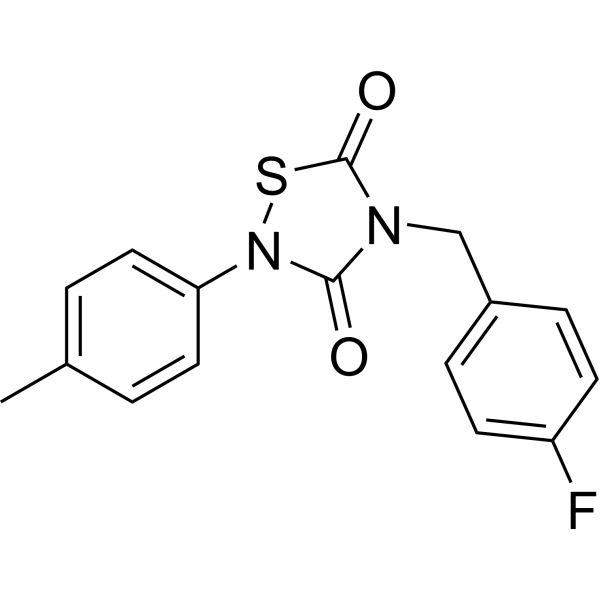 0 ImagesCCG-50014 is the most potent against the regulator of G-protein signaling protein type 4 (RGS4) (IC50 =30 nM) and is >20-fold selective for RGS4 over other RGS proteins. CCG-50014 binds covalently to the RGS, forming an adduct on two cysteine residues located in an allosteric regulatory site. CCG50014, reduces nociceptive responses and enhances opioid-mediated analgesic effects in the mouse formalin test.